Trams are a land public transport system with a long history in Hong Kong, having started operations in 1904. During the early days of operation, workers from the traffic department initiated the establishment of an off-site dormitory called "No. 7 House", which served as the prototype of the union. At that time, workers lived in extreme hardship without any welfare benefits. In 1920, the Hong Kong Tramways Progressive Association was organized to fight for workers' rights. Subsequently, the union went through many dark years of struggle, including experiencing the Canton-Hong Kong Strike in the 1920s, and was reorganized and registered as the "Hong Kong Tramways Company Traffic Department Chinese Workers Union" in 1931.
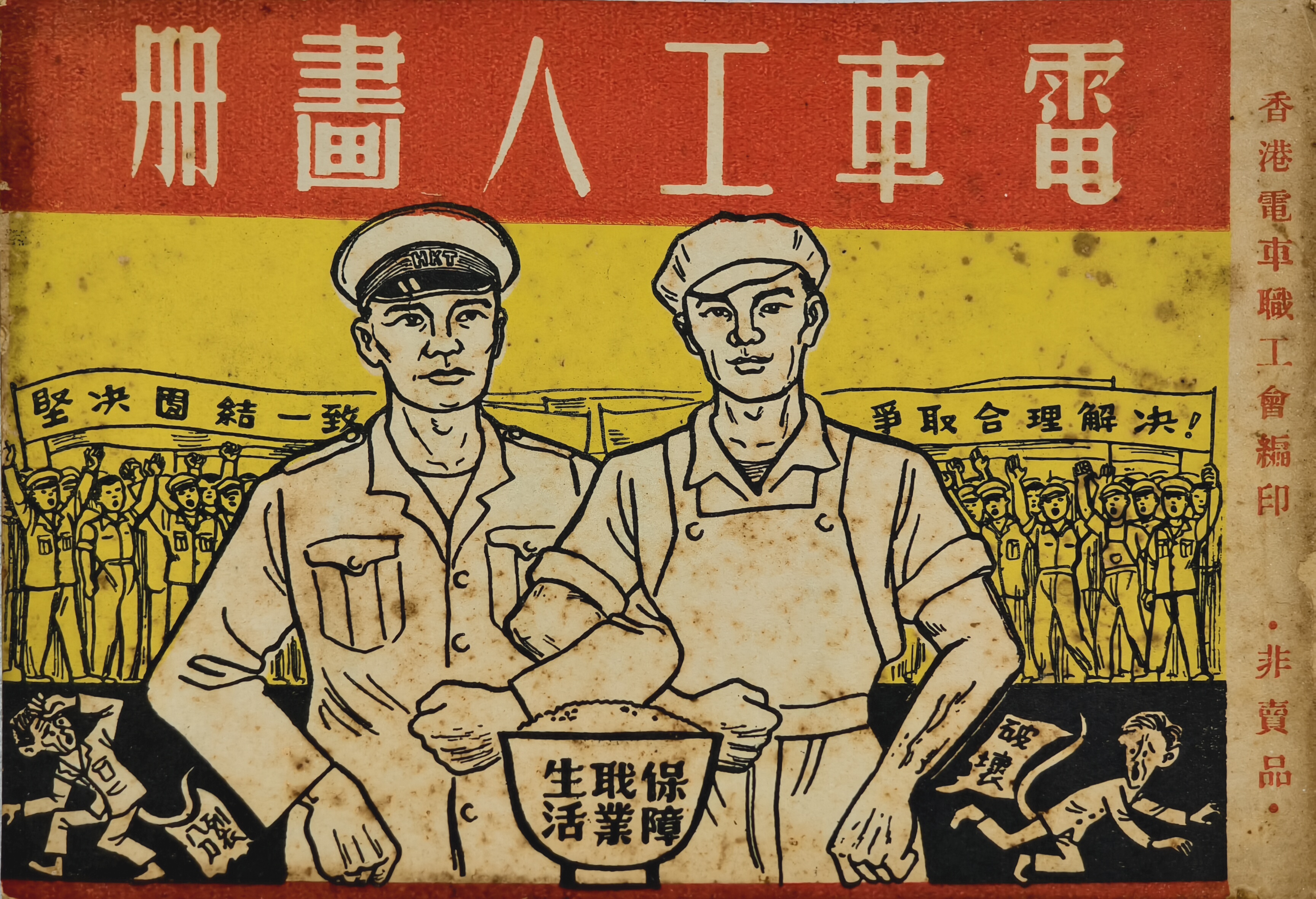
During the Japanese occupation of Hong Kong in the early 1940s, the union negotiated with the Japanese invaders on multiple occasions to maintain public transport for citizens and the livelihood of the workers. After the Japanese surrender, the union fought to recover various guaranteed allowances from the company and renegotiated agreements regarding work systems and rules. At the same time, it co-founded the Schools for Workers' Children with other trade unions, resolving the educational issues for workers' families. In early 1948, it joined 22 other unions to form the Hong Kong and Kowloon Federation of Trade Unions (HKFTU). In September of the same year, the union was renamed the "Hong Kong Tramways Workers Union". By late 1949, due to soaring inflation, the union demanded better pay to secure the most basic standard of living for the workers. After repeated rejections by the tramway company's management, they were forced to launch a four-day slow-down strike. Between 1950 and 1954, the "Russell Street" bloodshed and the "Johnston-style" dismissal incidents occurred respectively. Through the union's persistence and efforts, management's schemes were thwarted, and solidarity among workers was strengthened. In 1967, to defend national dignity, the Tramways Union joined patriotic compatriots from all walks of life in participating in the anti-British protests.
In the 1970s, Wharf Holdings acquired the tram company, but workers' treatment did not improve. In 1977, the company began implementing a "one-man operation" system. By 1982, the company abolished trailer cars, switched to fare box collection, and dismissed all conductors. The union had been negotiating with the company over the dismissals since 1977; through continuous campaigning, some workers transitioned to becoming drivers, while others secured greater compensation. Up until the 1990s, tram drivers had no scheduled meal breaks, which raised concerns about traffic safety. The union communicated with the tram company, and in 1998, the company finally introduced meal breaks for tram captains and improved shift scheduling issues.
After a French enterprise fully acquired the tram company in 2010, the union continued to negotiate closely with management from time to time on issues of employee concern. Examples include protesting unilateral changes to captains' shift rosters in 2010, protesting unequal pay for equal work in 2012, launching the "Defend the Tramways" campaign in 2015, and addressing the "forced unpaid leave" incident during Super Typhoon Mangkhut in 2018.
Regarding the development of union affairs, in the 1980s, the Tramways Union joined forces with the unions of CLP, HK Electric, Hong Kong Telephone, and Towngas to form the Federation of Hong Kong Public Utility Trade Unions. In 2015, the Tramways Union collaborated with four railway unions to form the Hong Kong Federation of Railway Trade Unions, promoting joint development with other unions and making the Tramways Union more active than ever before.
In addition, the Tramways Union actively connects with workers and recruits new members. It has repeatedly won the Outstanding Group Award from the HKFTU for its performance in developing and consolidating membership. Currently, about 60% of the tram company's employees have joined the union.
Having celebrated its 100th anniversary, the Hong Kong Tramways Workers Union will carry forward its legacy, uphold the excellent tradition of loving the country and loving Hong Kong established by its predecessors, stay true to its original mission, and tirelessly defend the rights and interests of tram workers, enabling the union to continuously grow, thrive, and achieve new brilliance!